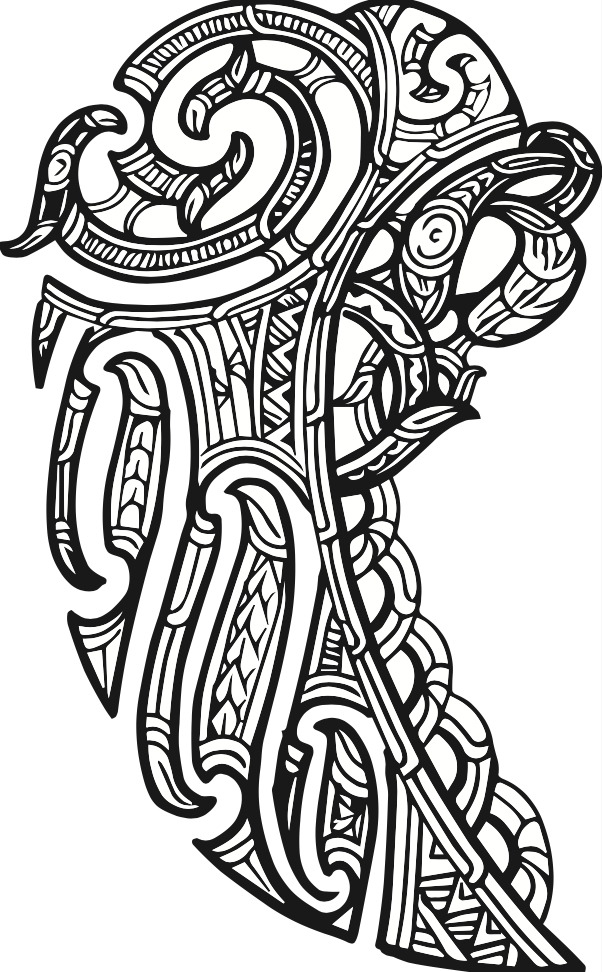
Connects us to multiple Atua including Papatūānuku – Hine Ahuone & Ukurangi – Rakahore – Tane, and many more.
Some Traditional uses for UKU
Manu/birds were covered in UKU and then cooked. Keeping in all the goodness and juices in. The feathers would get stuck in the clay and upon cracking the UKU open the feathers would get pulled out. Some UKU objects were made as fishing sinkers. Other objects baffle archaeologists.
These ancient UKU artifacts, look too much like kōruru/knuckle bones, not to be. We believe Māori 100% would have used clay for play!!!
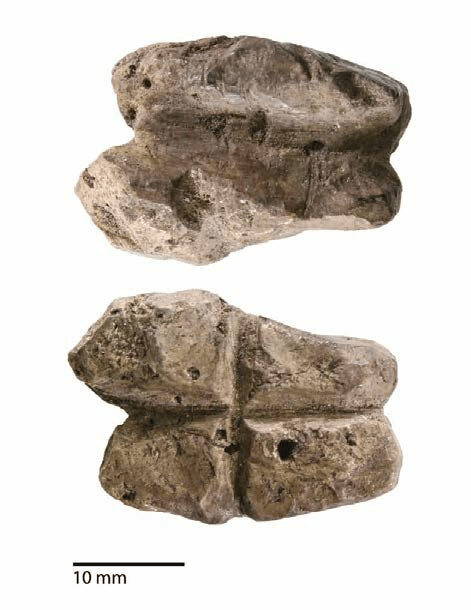
Activity – Finding IRA TAKARO, the element of play in the UKU
What objects of play could we make? What games could we play using UKU? Either discuss and/or preferably make a game, or objects that can be used for play.
Some examples include: Kōruru/knucklebones and perepere or pieces for games such as mūtorere/draughts etc.
NB: For each UKU activity we recommend giving the group as much tutu time as you time-frame can accommodate.
Taonga Pūoro
Another traditional use for UKU was taonga pūoro. Various shapes, including Nguru/nose flutes, and Manu Karanga (bird callers), have been found.
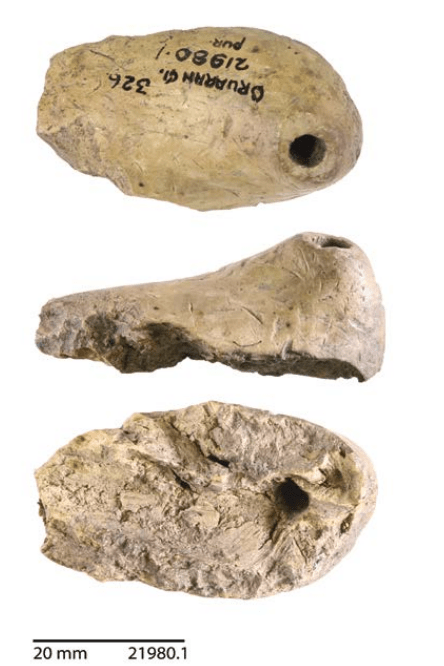
Activity – Making an UKUTANGI
INSTRUCTIONS:
- Take 2 golf/squash ball size of uku (50cm round) or small lime size.
- Roll them into 2 even-sized round-shaped, smooth balls (like squash ball)
- Create two even-sized pinch pots. Place your thumb at the top and middle of your UKU ball and press down.
- Then shape it with your thumb, while the ball is cupped in your opposite hand.
- Sparingly wet both rims with water and join together by cupping the two pinch pots together
- Join the pinch pots by gently pinching the edges together, and also
- Smooth over the edges with water
- NB – always try to maintain the ball shape as much as possible. And remember where your join is for when you make the wenewene/hole!
- Create the wenewene/hole by inserting a pencil. NB – make sure you do NOT make the wenewene on the join!
- Move the pencil around the hole to create about 15-20mm wide hole. (Try and make the hole as tidy as possible. Adding a small lip may help create the a better oro.)
- Test your Ukutangi by blowing across the wenewene and moving it around until you get an oro/sound or vibration.
- Extra wenewene can be added to change the pitch of the oro. These are small holes around 10mm. (Kia tupato/be careful when doing this as this can change or throw out your oro)
- NB: For each UKU activity we recommend giving the group as much tutu time as your time-frame can accommodate
Using Ukutangi connects us directly with Hine-Ahu-One, the breath of life, and a pantheon of other Atua.
Incorporate your Ukutangi into the ‘HA KI ROTO, HA KI WAHO’ activity.
Some of the many benefits of clay play:
Group engagement and connections
Enhances Creativity and Imagination
Develops Fine Motor Skills
Supports Sensory Development
Encourages Focus and Patience
Opportunities for Exploration
Tangible expression of pūrākau
Connection to Papatūānuku
Natural/eco friendly material
Extends to other subjects like literacy, art, science, maths, geometry, fractions, and much much more!
Activity can be easily be scaffolded, and for mastery over time.
What else can you think of? Drop us a line and let us know your whakaaro/thoughts and experiences!
TIPS:
Use Tarpaulin to cover tables and to put UKU on
Use a sponge in the container of water (avoids using too much water and reduces spills)
To reconstitute the UKU, add some moisture
Have a bucket of water to wash hands (clay is not good down the sink)
Return this water to Papatūānuku (it is Tikanga to return back to Papatūānuku)
Keep an eye out for more updates!
We LOVE hearing from your stories and seeing your photos. So PLEASE share them with us!
 Tū Mātau Ora